loosely woven
Output Is Rewarded, but Input Is Not
Note: This blog is something I write in the limited time I have. I wrote it in Japanese (mother's tongue) and had an AI turn it into English, followed by light final touch. That is why it may read a little AI-ish here and there. Do forgive me!
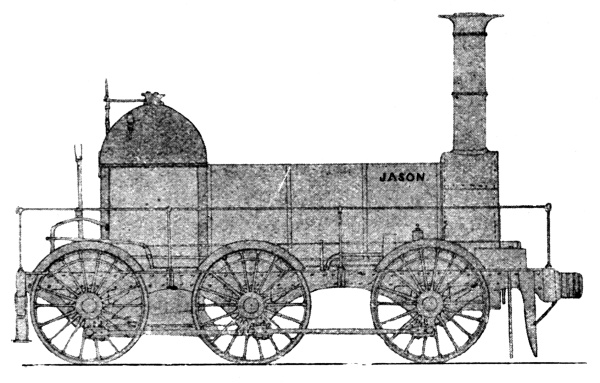
Figure: From G. A. Nokes, The Evolution of the Steam Locomotive (1803 to 1898) (1899). Project Gutenberg.
I participated in the warm-up session for YRCCS2026. It was a very fruitful session that gave me plenty of food for thought. One of the most interesting ideas came from Laurent Hébert-Dufresne’s talk, How to talk and listen and write and read. In his talk, he mentioned an asymmetry between the input and output of information in terms of rewards. This made clear to me why I have prioritized output over input, and what this habit could lead to.
I read papers I have been asked to review, and I read some papers from arXiv RSS feeds. But I do not think I read enough papers. Many researchers I respect not only know foundational work within and outside of their home fields but also keep up with the fast-growing literature. I wish I could do the same. Below are my thoughts after listening to the presentation.
Society Evaluates Output, Not Input
Society evaluates output. If you create something, you receive compensation in return. That is how society works. That is why many researchers, myself included, have spent so much time on output.
If you write a paper, it counts as an achievement. Papers are sent for peer review, and the very act of writing one is a plus for your career.
On the other hand, there is no reward for reading. Nowhere is it recorded how many papers you’ve read. As a result, reading can feel like a waste of time.
There Is a Delay in the Effects of Input
The relationship between the input of ideas and their output is similar to how a steam engine works.
In a steam engine, firewood is burned to heat water. The water turns into steam and is trapped inside the boiler. The trapped steam gradually builds up pressure as it pushes against one another. Only when the pressure exceeds a certain threshold does the piston begin to move. Even if you feed more firewood into the boiler, the piston doesn’t move immediately.
We, too, are thinking engines that work in the same way. We acquire materials (input) such as books, research papers, and conversations with others. These accumulate little by little in our minds, building up like pressure. When that pressure exceeds a certain threshold, it emerges as writing or ideas. Simply reading does not generate output; it is only through the process of thinking, writing, and speaking that what has accumulated is released.
The difference from a steam engine is that if you allocate time toward output, the volume of output (such as the number of papers) increases. This is problematic. Why? Because while the person producing the output receives short-term rewards for their work, if they continue to produce similar ideas, those rewards will diminish over the long term. If your ideas are becoming repetitive, that is a warning sign.
Making It a Habit
While reading papers and listening with interest to others’ ideas and stories is important, the asymmetry in rewards between input and output (as mentioned earlier) and the delay in response make it difficult to maintain a steady flow of input.
One researcher is tackling this problem. Molecular biologist Olivia Rissland began reading one paper every day starting January 1, 2018. She says it started as “a bit of a lark,” but within a month, it had become a habit. By June 2020, she had read a paper every day for 899 consecutive days. She shares the papers she reads in a dedicated Slack channel for her lab and records each one, line by line, in a Google Sheet. She believes that setting aside time to read papers is more important to the lab’s success than answering emails. (Source: Nature Index, September 8, 2020)
Based on this article and Laurent’s presentation, I’ll outline below what I can do, taking my own tendencies into account.
Two modes of reading
This is something many people do but I put it here explicitly.
Reading can be in two ways: broad mode and depth mode.
The broad mode is a mode for gaining a broad, superficial understanding of the papers that come my way every day. I read the titles and abstracts and select the ones that interest me.
We can broaden the search and reduce the cost by using large language models. One idea, which was suggested by one of my students, is to turn a paper into a podcast and listen to it while driving. I’d like to try these new ways to quickly grasp the high-level idea of papers.
On in-depth reading mode, it is a mode to read a paper thoroughly. I actually like to read the paper from start to finish thoroughly, when I decide to read. However, it is hard to find time to read even when I try to set time aside. That’s why, as Olivia Rissland did, it is a good idea to set aside specific reading times in advance each week and make sure to stick to them regularly. And the way she keeps this habit is very useful (e.g., accountability, set aside reading time).
Listening to Others
Papers aren’t my only source of input. New ideas also emerge from talking with people and listening to presentations.
Online presentations and meetings are increasingly common. In terms of sheer volume of information, there may not be a significant difference between in-person and online interactions. Still, I feel that when I listen to a presentation in person, the content sinks in my brain more deeply. It sticks in my memory better, and various ideas pop into my head while I’m listening.
I used to check my email on my computer while listening to presentations. That’s fine if the topic doesn’t interest me. However, I’ve come to feel that I should loosen my filter a bit and really listen to what people say. While some of it might not be related directly to my interest, it can also plant the seeds for new ideas.
However, simply listening doesn’t make the information stick, so I take notes. Writing down points that catch my attention helps me stay focused, and the act of writing itself expands my thinking further. Listening in person and taking notes is something I plan to make a habit going forward.
Summary
Output and input are asymmetrical in terms of evaluation. Output yields rewards, while input does not. Furthermore, because there is a delay before input is converted into output, it’s hard to feel the effects of input. Moreover, if you devote time to output, you’ll produce some kind of result and gain short-term rewards. However, output is supported by input. If input decreases, output will eventually diminish as well.
Of course, this doesn’t mean you should spend all your time on input. You need to continue producing output to some extent. Therefore, the key is figuring out how to lower the cost of input and make it a habit within those constraints.
Just as a steam train takes in firewood and water as inputs, converts them into power using various mechanisms, and turns its wheels, we are thinking engines that take in inputs (the work of others), transform them, and create new outputs. With that image in mind, I want to invest in inputs so that I can keep running.